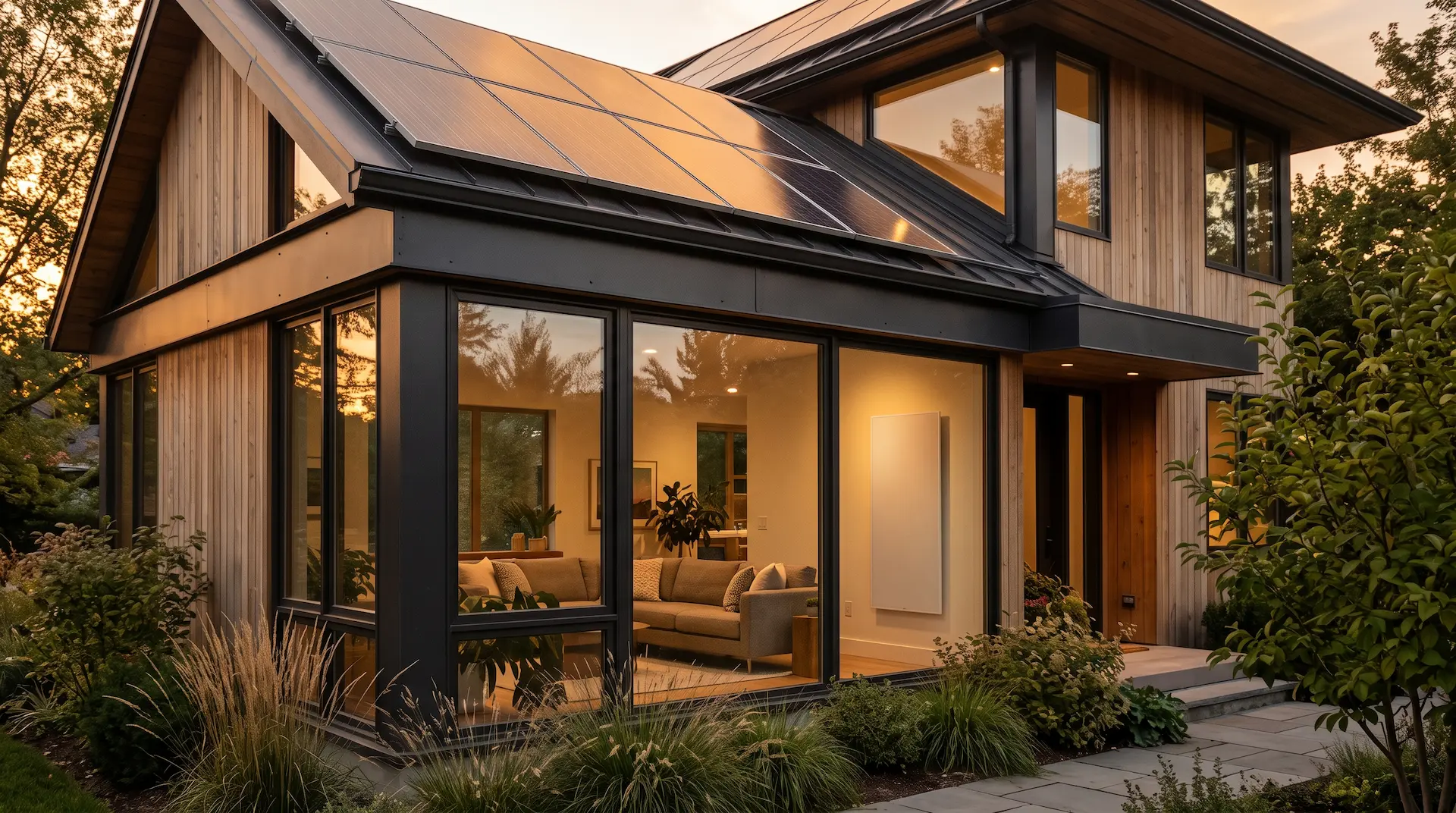
The panels on your roof generate electricity every day. But when winter comes, will you still have to depend on another energy source just to stay warm?
From the sunny coasts of the Mediterranean to the long winters of Northern Europe, many homes and businesses across different climates and markets face this same question. Choosing a heat pump can mean a high upfront cost and weeks of construction work. Choosing natural gas brings line installation, bureaucracy, and extra cost into the picture.
Yet for a building that produces solar energy, there's a simpler path: an easy-to-install heating system that converts the electricity you generate directly into heat. In this article, we take an honest look at how Sunlike Tec infrared panels work alongside solar power plants (SPPs), what an independent study found, and the limits of that data.
Why Are Solar Power and Infrared Heating Such a Good Match?
A solar power plant generates electricity. Sunlike Tec panels also run on electricity, with no combustion. There is no fuel, boiler, flue, or plumbing in between.
This simple structure means the electricity you generate can be used directly for heating. This can reduce your dependence on externally sourced energy and the grid for your heating needs.
Far-infrared radiation resembles the way the Sun warms the Earth. Rather than heating the air and letting it escape to the ceiling, it transfers energy directly to people, walls, and objects. That's where Sunlike Tec's slogan comes from: it heats like the sun.
What Does Independent Research Say? The Numbers and Their Context
Dr. Peter Kosack of TU Kaiserslautern compared two apartments in the same old building during the 2008/2009 heating season (October 1, 2008 – April 30, 2009). One apartment was heated with infrared radiation, the other with a low-temperature gas system.
| System | Final energy consumption |
|---|---|
| Infrared radiant heating | 71.21 kWh/m² |
| Low-temperature gas heating | 208.73 kWh/m² |
| Condensing gas (calculated value) | 187.85 kWh/m² |
According to this measurement, infrared heating consumed 65.9% less final energy than the gas system. Compared against the calculated value for condensing gas technology, infrared consumption came to just 37.9% of that figure.
It's important to read this data correctly. The comparison is based on final energy (kWh), not bills or cost. The measurement was carried out in a single building over a single season. The result for your own building will vary with insulation, usage habits, and building structure.
The report also highlights infrared heating's low investment cost, easy maintenance (no tasks like flue cleaning), and the fact that it can be powered entirely by renewable energy. For solar power plant owners, this last point is especially meaningful.
The Thermal Reservoir Effect: Warmed Surfaces Hold Heat
Infrared radiation heats surfaces, not air. The warmed walls, floor, and furnishings store this heat for a while and release it back into the space.
This means the heated building elements behave like a small thermal reservoir. Surfaces warmed by electricity generated during sunny hours help comfort feel more stable and even over time.
Because no air current is created, dust isn't stirred up and no sensation of dry air is produced. No oxygen is consumed, and no combustion byproducts are generated.
This approach is also different from the long preparation process required for a heat pump or natural gas. Without waiting for line installation, permitting processes, or weeks of construction work, you can start heating through your existing electrical infrastructure. Once installed, the panel is designed to operate without maintenance throughout its stated 30-year catalog lifespan.
No Demolition, No Mess: Installation and Choosing the Right Model
SL Series panels are only 25 mm thick. They mount flush against the wall or ceiling using a TV-bracket-style mounting system. Suspended-ceiling models sit directly into a standard 600×600 grid.
| Model | Power | Heating area* |
|---|---|---|
| SL 450 | 450 W | 8 m² |
| SL 640 | 640 W | 12 m² |
| SL 900 | 900 W | 17 m² |
Heating area depends on insulation, usage pattern, and building structure.
The SL Series is manufactured in Turkey under UK license and is designed for indoor use. The panels carry UKCA (United Kingdom) and CE (European Economic Area) conformity markings. For larger spaces such as warehouses, workshops, or large halls, the OYKİ Series is the better fit. We recommend working out the right plan for your solar power plant capacity and heating needs together with our specialists. It's recommended that the electrical connection be made by a licensed electrician. Please also confirm compliance with your country's electrical infrastructure and local regulations with our specialists.
Frequently Asked Questions
Q: How does infrared heating work with solar power (SPP)?
A solar power plant generates electricity; Sunlike Tec infrared panels also run on that electricity, with no combustion. Since there's no fuel, boiler, flue, or pipework in between, the electricity generated is converted directly into heat. The panels heat people and surfaces, not the air.
Q: Does infrared heating eliminate the electricity bill in a home with solar panels?
No such guarantee can be given. The outcome depends on your solar power plant's output, the season, climate, insulation, and usage habits. Infrared heating helps reduce dependence on the grid by converting the electricity you generate directly into heat.
Q: Does infrared heating use less energy than natural gas?
In an independent measurement by Dr. Peter Kosack of TU Kaiserslautern during the 2008/2009 season in an old building, infrared heating consumed 65.9% less final energy than a low-temperature gas system. This is a final-energy comparison, not a cost comparison, and it is single-building, single-season data.
Q: How many square meters does each Sunlike Tec model heat?
The SL 450 is designed to heat approximately 8 m², the SL 640 approximately 12 m², and the SL 900 approximately 17 m². Heating area depends on insulation, usage pattern, and building structure. For larger spaces such as warehouses or large halls, the OYKİ Series should be considered.
Q: Does installing an infrared panel require renovation work?
No. Sunlike Tec panels require no wall-breaking, pipework, or complex plumbing. The panels are mounted to the wall or ceiling with a TV-bracket-style system; it's recommended that the electrical connection be made by a licensed electrician.
Q: What is the warranty and lifespan of Sunlike Tec panels?
Sunlike Tec products come with a 3-year warranty and a 30-year lifespan. The panels require no maintenance; there are no routine tasks like filter changes or flue cleaning.
Q: Can Sunlike Tec panels be used in different countries?
Sunlike Tec products carry UKCA (United Kingdom) and CE (European Economic Area) conformity markings and serve projects across different climates and markets. We recommend speaking with our specialists to confirm compliance with your country's electrical infrastructure and local regulations.
Create Your Own Sunshine
If you're ready to turn the energy from your roof into comfort this winter too, reach out to us for a needs analysis. Visit sunliketec.com, write to info@sunliketec.com, or call +90 850 304 94 34; let's prepare the right plan for your building and your solar power plant capacity together.
Sources
- Kosack, P. (2009). Comparative Measurements between Infrared Radiant Heating and Gas Heating Systems in Old Buildings. Research report, TU Kaiserslautern (Arbeitskreis Ökologisches Bauen).
- Sunlike Tec Product Catalog (2026)
- Sunlike Tec Use and Installation Guide